Seasonal movement
Framing expands and contracts through our temperature swings. Cracks that reopen every winter are usually movement, not bad workmanship.
Nail pops, settlement cracks, doorknob holes, failed tape joints, and water stains. Fresh paint over an unrepaired wall just gives you a smoother-looking version of the same problem — so this is the step that happens first.
Our clay soils swell and shrink with moisture, our winters drive indoor humidity down near zero, and framing lumber shrinks as it dries. All of that puts stress into drywall — which is why nail pops above doorways and cracks running off window corners are so common in this city.
Framing expands and contracts through our temperature swings. Cracks that reopen every winter are usually movement, not bad workmanship.
A dried-out water stain still bleeds through fresh paint unless it's sealed with a stain-blocking primer first. Paint alone will not hide it.
Anyone can fill a hole. Making the repair invisible under a light means feathering it wide and sanding it truly flat.
Minor filling is standard prep on any repaint. This page is about the bigger stuff — the repairs that get quoted as their own line so you can see exactly what they cost.
Get a free quote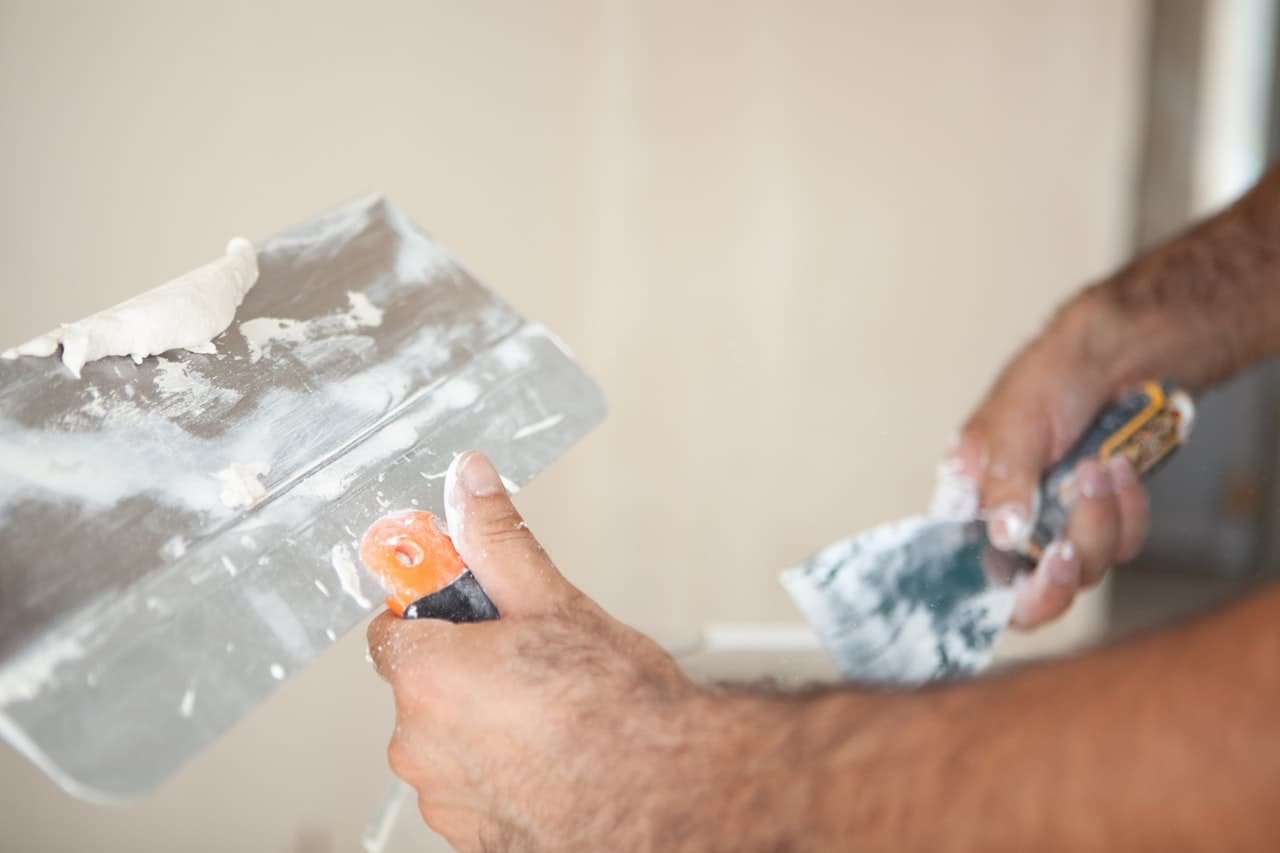
Minor filling and sanding is included free in any repaint scope.
Get your exact priceStandard filling and sanding is included in any repaint at no extra cost. Major drywall repair is quoted as a separate fixed price once we've seen it — the amount that has to be cut out, and the number of compound coats it needs, vary far too much for a per-square-foot rate to be honest.
Got cracks that keep coming back? Send photos and we'll tell you what's actually going on.
Get a free quoteBecause they were filled rather than repaired. A settlement crack is a joint that has moved, and filler alone has nothing holding it together — the crack reopens with the next seasonal shift. A proper repair cuts the crack out, re-tapes the joint, and feathers it wide so the repair spans the movement.
Yes, when they're refastened rather than skimmed. A nail pop means the fastener has backed out of the stud, so we drive a screw properly into the framing beside it, remove or set the popped fastener, then fill and feather. Skimming over the bump without refastening is why they reappear.
In most cases, yes — knockdown, orange peel, and stipple textures can all be matched closely. We'll be upfront that a patch repair in a heavily textured ceiling is rarely completely invisible under every lighting condition, though it's usually indistinguishable in normal light.
Yes, if it's only painted over. Water stains carry tannins and minerals that bleed through ordinary paint, sometimes weeks later. They need sealing with a stain-blocking primer first. And if the leak causing it hasn't been fixed, we'll say so — repainting is pointless until it is.
Standard prep is: filling nail holes, small cracks, minor dents, and sanding them flat is part of any repaint scope at no extra cost. Larger work — holes, failed tape, water damage, re-texturing — is quoted as its own line so you can see exactly what it costs and decide.
Compound needs to fully dry between coats, and most repairs need two or three coats. A small patch might be paint-ready the same day; a larger repair usually means waiting until the next day before priming. We build that into the schedule so it doesn't delay the rest of the job.
If your paint is peeling, the paint is rarely the problem. Here are the three real causes and what actually prevents them.
Read the guide
Real 2026 numbers for painting a room or a whole home in Edmonton, and the four things that actually move the price.
Read the guide