UV breaks the binder down
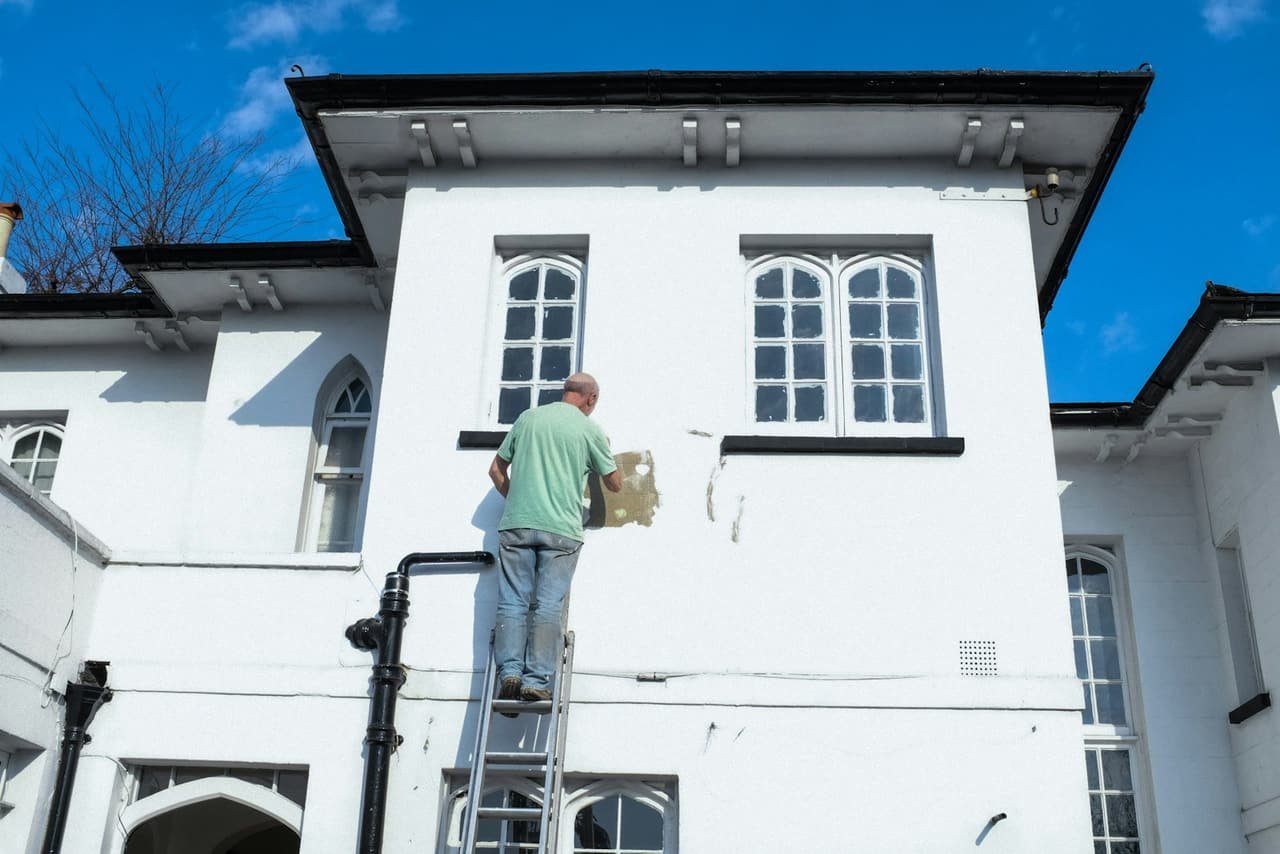
South and west elevations always fail first. Chalky, faded siding is the binder giving up, and it needs washing back before recoating.
Repainting siding is the single biggest change you can make to how a house looks from the street. It is also the coating on your home that works hardest — sun, hail, and freeze-thaw all attack it, and prep is what decides whether it lasts three years or ten.
A south-facing wall in Edmonton takes brutal UV all summer, then swings through dozens of freeze-thaw cycles over winter. Coatings expand and contract with that, and anything not bonded to a sound, clean surface lets go at the edges first.
South and west elevations always fail first. Chalky, faded siding is the binder giving up, and it needs washing back before recoating.
Water gets into an unsealed joint, freezes, expands, and lifts the coating from behind. That is why peeling starts at seams and cut ends.
Siding that stays damp — north faces, behind shrubs, near grade — needs drying out and priming, not just a fresh coat over the problem.
Most of the labour in an exterior repaint happens before any colour goes on. That is not padding — it is the entire difference between a finish that lasts a decade and one that peels by the third spring.
Get a free quote
Free quote, fixed price in writing. Trim-only and single-elevation work costs much less.
Get your exact priceExterior work is priced on the surface area, how many storeys it is, the siding type, and above all the condition. A house with sound existing paint costs far less than one that needs extensive scraping and priming first.
Planning for this summer? Get a free quote in spring to secure your dates.
Get a free quoteExterior work is measured and priced on site, because the number is driven as much by condition as by size. A house with sound existing paint that needs washing and recoating is a very different job from one with widespread peeling that needs scraping and priming across every elevation. We measure, assess each elevation, and put a fixed price in writing. The quote is free.
Roughly May through early October. Coatings need daytime temperatures reliably above their minimum and enough margin above the dew point to cure properly. Painting too cold or too damp produces a film that never fully hardens and fails early — so we watch the forecast and will reschedule rather than push a bad window.
With proper prep and quality product, expect roughly 7 to 10 years on siding and trim in this climate. South and west elevations weather fastest because they take the most UV, so it is normal for those to need attention a few years before the rest of the house.
Usually a combination. Spraying lays down an even film quickly across large areas, and back-rolling or back-brushing works it into the surface for adhesion. Trim, cut lines, and detail work are done by hand. The right mix depends on the siding profile and how much masking the site needs.
Yes, with a bonding primer rated for vinyl — but with one hard constraint. Vinyl expands when it absorbs heat, so going significantly darker than the original colour can cause panels to warp permanently. We will tell you honestly which colours are safe for your siding before you fall in love with one.
All of it can be included, and doing trim at the same time as siding is far more economical than coming back for it separately — the setup and masking are already done. We break the elevations and the trim out as separate lines in the quote so you can see the cost of each.
The exterior window here is short and it books out fast. Here is what actually decides whether a coating will cure — and when to get your quote in.
Read the guide
If your paint is peeling, the paint is rarely the problem. Here are the three real causes and what actually prevents them.
Read the guide