
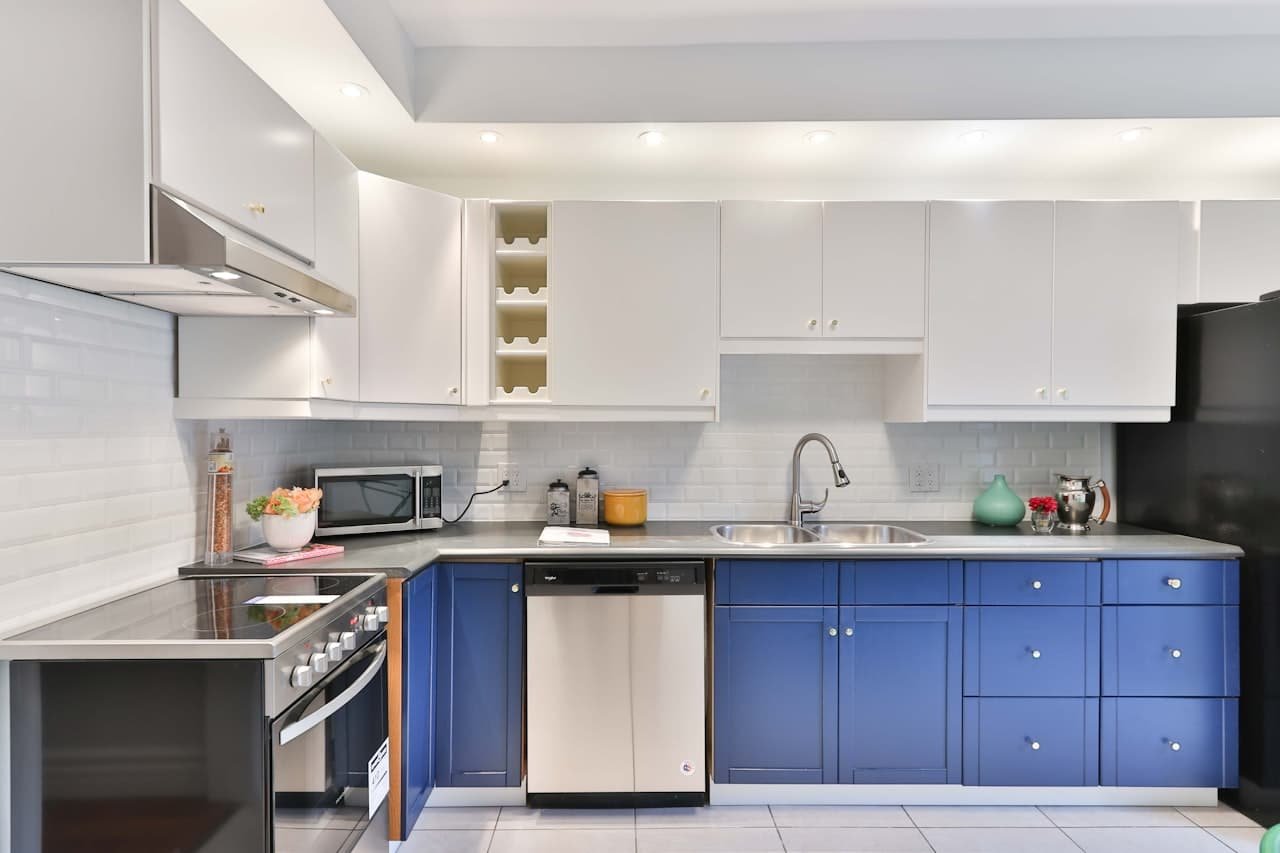
New kitchen cabinets are one of the most expensive things you can do to a house. Refinishing the ones you already have costs a fraction of that and, done properly, looks just as good.
But refinishing is not always the right answer, and any painter who tells you it always is has something to sell. Here is the honest version.
Refinish when the boxes are sound
Most Edmonton kitchens built in the last thirty years have solid, square, perfectly serviceable cabinet boxes hiding under an oak or honey-maple finish that announces the decade it was installed.
If the doors close properly, the boxes are not water damaged, and the layout works for you, then the only thing wrong with that kitchen is its colour. That is a paint problem, not a carpentry problem.
- Boxes are solid and square, with no water damage or swelling
- The layout works — you are not trying to move the sink or add an island
- Doors and drawers still open and close properly
- You like the door style, or at least do not hate it
Replace when the problem is not the finish
Paint cannot fix a layout. If you want a different footprint, more drawers, taller uppers, or a pantry where a wall currently is, refinishing just gives you the same kitchen in a nicer colour.
Replace when the boxes are failing — particleboard that has swollen under a leaking sink will not hold a finish. And be cautious with thermofoil that is already peeling or bubbling away from the substrate: it can sometimes be coated, but if the foil is lifting, nothing will stick to it properly. We will tell you that at the quote rather than take your money.
What refinishing costs and how long it takes
Cabinets are priced per door and drawer front plus the boxes and frames, with a $3,000 minimum. A typical 20-piece kitchen runs about $3,150 to $3,450; a larger 30-piece kitchen about $4,400 to $4,700, before unusual repairs or specialty finishes. A large pantry door counts as two pieces.
Most kitchens take three to five days from removal to rehang. You lose the use of your cabinet doors for that stretch, but your counters, sink, and appliances stay available the whole time — which is the practical advantage over replacement that people underestimate.

The one question that decides quality: sprayed or brushed?
Sprayed. On a flat cabinet door your eye catches brush marks and roller stipple immediately, and once you have seen them you cannot unsee them. Doors and drawer fronts should come off and be sprayed; boxes and face frames that cannot be removed are finished in place using methods that match.
The other thing that decides whether a cabinet finish lasts is degreasing. Kitchen doors carry years of cooking grease and hand oil, and paint does not stick to that no matter how good the paint is. Degrease, scuff sand, bonding primer, then finish. Skip any of those and it chips off the corner of the sink door by spring.
A note on oak grain
Oak has a deep, open grain that will still read through paint unless it is filled first. Neither choice is wrong — filled gives you a smooth, modern, almost factory look; unfilled keeps a subtle wood texture that some people prefer.
It does change the labour, so it belongs in the quote as its own decision. We will show you both before you pick.